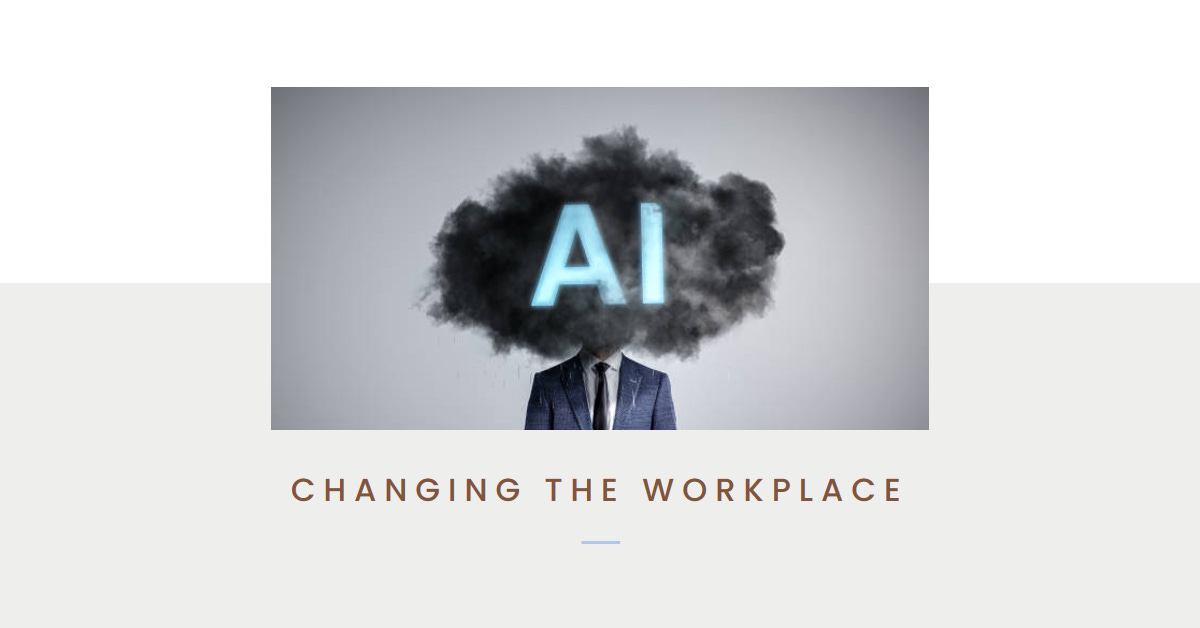
Gen-AI and the Job Market: Reflections from 2023 and Expectations for 2024
As we enter the new year there is a growing sense of excitement and a fair amount of trepidation about how the tech will continue to affect jobs.
It’s great to be back after the holidays, and I wish all of you a safe, prosperous, and healthy 2024.
In 2023, the gen-AI revolution transformed the job landscape to a degree. Cutting-edge AI technologies automated numerous tasks, reshaping industries and sparking debates on workforce evolution. As we step into 2024, there's a palpable anticipation around how this tech will further innovate job roles and potentially create new employment opportunities in unexplored domains.
Now, before going ahead, let’s look at the AI Job Indicator.
In Today’s Newsletter:
AI could potentially replace 300 million full-time jobs
Potential Impact of AI Agents in the Workplace
Duolingo Sacks 10% Contractors in Favor of Gen-AI
Implications of AI on Job Market in 2024
How AI Changed the Workplace in 2023
Jobs That Will be Replaced by AI in 2024
IBM HR Chief Says Few Jobs Will Be Lost to AI
Major Survey Reveals AI Predictions
How LLMs Are Cool Despite Drawbacks
Coming Up: A Robot For Your Household Chores
The Future of Education in Light of Gen-AI
AI Anthropomorphism
US Bipartisan Congressional Group Proposes Legislation for Federal AI Risk Management
Plus, all the regular add-ons like “Top Picks”, etc.
Announcements
“AI For Real” Is Creating Waves. Join The Community Now
“AI For Real” is now a vibrant, fast-growing online global universe. We are a community catering to the average Joe and Jane, not just AI experts and practitioners.
We delve deep into the latest AI breakthroughs, making them accessible and pertinent to your everyday life. Our focus extends beyond just sharing AI advancements; we explore their impact on common aspects like employment and ethical dilemmas. Stay abreast of cutting-edge research by subscribing to our services.
To stay in the loop and get updates, make sure to subscribe to all or any of our services.
Join us on this journey of discovery and exploration as we uncover the deep influence of AI on our daily lives.
Our motto - Breaking Down AI For Everyone
Get In Touch to Unlock the Power of AI for Your Business and Personal Growth
Are you a brand, a business, or an individual looking to get insights into artificial intelligence?
As an expert AI communicator, I specialize in bridging the gap between complex AI technologies and practical applications for businesses and individuals. Whether you're looking to enhance your company's tech capabilities or simply curious about how AI can streamline your daily life, I offer tailored solutions and insights.
Stay ahead of the curve with my services - your guide to navigating the ever-evolving world of artificial intelligence.
Contact me today to transform your AI understanding into real-world success!"
How Generative AI is Really Affecting Humans
This editorial has been influenced by a post written in the newsletter “The Muse” by Czech-American literary author Birgitte Rasine. I found it through another newsletter “AI Supremacy” by Michael Spencer.
Birgitte writes on the creativity, ingenuity, and untapped potential of humans in an AI-obsessed world! In fact, I highly recommend “The Muse”.
The post set me thinking.
As we stand on the cusp of a new era marked by the rapid advancement and widespread adoption of generative artificial intelligence (AI), we must consider the multifaceted impacts of this technology on our society. Not many of us have really thought about how Generative AI (gen-AI), typified by its ability to create content that appears human-made, is impacting our culture, psychology, and collective human experience.
How is this tech reshaping the world we live in, not just technologically, but at a deeply human level?
Cultural Implications
Culturally, generative AI heralds a paradigm shift. This technology democratizes creativity, enabling individuals to craft art, music, literature, and more with tools that were previously inaccessible to many. This newfound accessibility can foster a renaissance of sorts, where creativity is no longer the exclusive domain of those with years of training or access to elite resources. However, this democratization also raises questions about originality and authenticity. As AI-generated creations proliferate, distinguishing between human and machine-made content becomes challenging, potentially blurring the lines of artistic and intellectual ownership.
Furthermore, generative AI has the potential to both preserve and transform cultural narratives. By analyzing vast amounts of data, AI can generate content that reflects diverse cultural stories and histories, contributing to a more inclusive global narrative. However, there is a risk of homogenization if these narratives are filtered through the biases inherent in the data sets used to train these AI systems.
Psychological Effects
The psychological impacts of generative AI are profound and multifaceted. On one hand, AI-generated companions and therapists offer new avenues for mental health support, particularly in areas where such resources are scarce. These AI systems can provide a non-judgmental space for individuals to express their thoughts and feelings, potentially reducing loneliness and mental health stigmas.
However, the increasing realism of AI-generated content raises concerns about its impact on our perception of reality. The difficulty in distinguishing between real and AI-generated interactions could lead to a phenomenon known as 'reality apathy', where individuals become indifferent to the distinction between authentic and artificial experiences. This blurring of lines can have profound implications on trust, relationships, and our understanding of truth.
Collective Impact
At a collective level, generative AI is reshaping industries and labor markets. While it drives efficiency and innovation, there is a looming concern about job displacement. Roles traditionally requiring human creativity and decision-making are increasingly performed by AI, necessitating a reevaluation of our workforce structure and the skills valued in a society increasingly reliant on artificial intelligence.
Moreover, the ubiquity of AI-generated content could lead to an 'echo chamber' effect, where personalized AI algorithms reinforce existing beliefs and perspectives, potentially exacerbating social divides. This underscores the need for ethical AI development that prioritizes diverse and unbiased data sources.
Navigating the Future
In navigating this new reality, it is crucial that we approach generative AI with both optimism and caution. Policies and ethical frameworks must be developed to address issues of intellectual property, data privacy, and the ethical use of AI. Education systems should evolve to equip future generations with the skills to thrive in an AI-integrated world, emphasizing critical thinking, creativity, and emotional intelligence.
Moreover, fostering a culture of awareness and open dialogue about the benefits and challenges of generative AI is essential. By understanding and engaging with this technology, we can harness its potential while mitigating its risks, ensuring that generative AI serves as a tool for enhancing, rather than diminishing, the human experience.
Clearly, and we should not forget this, the journey into the era of generative AI is not just a technological voyage but a deeply human one. It challenges us to redefine creativity, authenticity, and our very understanding of reality. As we embrace this transformative technology, let us do so with a mindful awareness of its profound impacts on our culture, psyche, and collective existence.
AI could potentially replace 300 million full-time jobs
Reports show that AI could replace around 300 million full-time jobs in the future.
A report by Goldman Sachs highlights that AI, particularly generative AI like ChatGPT, has the potential to take over a quarter of work tasks in the USA and Europe. While AI advancements may make some jobs obsolete, they also create new opportunities.
The safest jobs from AI are skilled manual jobs and some professions in the medical field, such as mechanics, plumbers, carpenters, and oncologists. On the other hand, data entry assistants and careers in the media industry, like advertising specialists and journalists, are at higher risk of being replaced by AI.
Source: independent.co.uk
Potential Impact of AI Agents in the Workplace
The opaque decision-making process of AI agents and the lack of understanding of human culture pose significant challenges for governance.
This article by digital anthropologist Giles Crouch discusses the potential implications of AI agents in the workplace from a cultural perspective. The author explains that AI agents, which have agency and can learn from social interactions, become social actors. They argue that businesses need to consider the impact of AI agents on workplace culture and address potential issues such as AI agents adopting toxic traits or retaining the characteristics of employees who leave.
The article also raises questions about the governance, decision-making, and productivity implications of AI agents in the workplace. Overall, the author emphasizes the need for a broader understanding of AI's role beyond productivity and scientific management.
Source: medium.com
Get Our GPT - AI For Real Bulletin. The ultimate source for the latest AI news! 🤖 Dedicated to delivering up-to-date and accurate information on AI advancements and their impacts across various sectors. Whether it's the newest tech breakthroughs or historical AI context, “AI For Real Bulletin” makes understanding AI simple and reliable.
Stay ahead with “AI For Real Bulletin”, where AI news is always clear and credible. 🌐
Duolingo Reduces 10% Contractors in Favor of Gen-AI
Duolingo, the language translation app, recently ended contracts with 10% of its contractors, transitioning some of their roles to generative AI for content development.
According to a statement from CEO Luis von Ahn in a November shareholder letter, Duolingo leverages generative AI to expedite the creation of language learning materials, including scripts and shows.
A representative from Duolingo noted that the reduction in contractor use is partly due to the company's increased reliance on AI. They emphasized that these contractors were not dismissed but rather completed their assigned projects at the end of 2023. Duolingo continues to use AI for various tasks, notably in course content generation, but maintains that human staff play a crucial role in content creation.
This change follows allegations from an unnamed former Duolingo contractor, who claimed a significant number of contractors focused on translation tasks were offboarded, with AI taking over due to its speed and cost-effectiveness.
Source: businesstoday.in
Implications of AI on Job Market in 2024
The rise of AI automation in the job market presents challenges of job displacement but also opens up new opportunities for upskilling and creative work.
The demand for AI specialists is increasing, creating an opportunity for individuals to upskill in AI-related fields and for educational institutions to offer AI-focused programs.
The integration of AI in the workforce can enhance human capabilities, automate mundane tasks, and foster increased productivity, but ethical considerations and governance are crucial to ensure responsible AI use.
This article discusses the impact of AI on the global job market in 2024. It highlights the rise of automation and the potential for job displacement in certain industries but also emphasizes the creation of new job opportunities and the evolution of job roles.
The demand for AI specialists is expected to increase, presenting an opportunity for individuals to upskill in AI-related fields. The article also explores the concept of an AI-augmented workforce, where AI enhances human capabilities and frees up time for higher-value activities. Overall, the article emphasizes the need for adaptation, continuous learning, and ethical practices to ensure a positive and inclusive future for the global workforce.
Source: setnakuri.com
Top AI Jobs in 2024
AI is creating new job opportunities in fields such as AI research, engineering, and ethics, requiring specific qualifications and skills.
AI professionals who adapt to the evolving technology and trends are more likely to secure their positions in the job market.
As AI continues to expand, it is important for professionals to stay updated and continuously learn in order to stay competitive in their careers.
AI is expected to continue its rapid growth in 2024, with more companies investing in AI to expand and improve productivity. While there is concern about AI taking over human jobs, there are also many new job opportunities being created. Some of the top AI jobs in 2024 include AI research scientist, AI engineer, machine learning engineer, AI ethics consultant, AI data engineer, AI product manager, AI solution architect, and computer vision engineer.
Source: indianexpress.com
How AI Changed the Workplace in 2023
The rise of artificial intelligence has caused concerns about job security, as many employees believe that AI will eventually replace them in the workplace. AI has already had an impact on hiring and the workforce, with a shift in available jobs and an increased demand for AI-focused employees.
While some experts believe that AI will lead to job cuts, others suggest that workers may experience wage pressure before job loss. Job seekers may also encounter AI in the hiring process, as some companies are using AI interviews and expect AI to replace humans in the hiring process eventually.
The use of AI in the workplace has also been a point of contention in labor negotiations, such as the Hollywood writers and actor strikes. Overall, AI is expected to reshape the workforce in the coming years and find its way into every industry.
Source: foxnews.com
Exciting Opportunities for Newsletter Sponsorship!
Discover available ad and sponsorship slots for this newsletter by clicking on this link. Explore the various packages to find the perfect fit for your brand.
If you would like further information, please don't hesitate to contact me. Let's collaborate and customize the best deal tailored to your specific needs. Click on the tab above. Or, for individual requirements, write to marketing (at) newagecontentservices.com
Jobs That Will be Replaced by AI in 2024
AI advancements are revolutionizing various industries, improving efficiency, accuracy, and customer experiences.
Jobs that involve repetitive tasks and clear patterns are at a higher risk of being replaced by AI technology.
The article discusses the rapid advancement of AI technology and its impact on various industries. AI is revolutionizing healthcare, finance, manufacturing, retail, transportation, and other sectors by making processes smarter and more efficient.
The article highlights the top 10 jobs that are likely to be taken over by AI in 2024, starting with telemarketers and bookkeeping clerks. It explores the impact of AI on these jobs, the changes in the workforce, and the emergence of new career opportunities. It also mentions the AI technologies that could replace these jobs, such as automated call platforms, accounting software with AI integration, and drones for delivery services.
Source: squash.io
But…IBM HR Chief Disagrees
IBM HR chief has stated that very few jobs would be completely replaced by AI. The company anticipates that while some roles will be eliminated or supplemented, the majority of jobs will evolve with AI integration rather than be replaced. This reflects a broader trend of AI augmenting rather than replacing human labor.
Source: westfaironline.com
Survey Reveals AI Predictions: Rapid Progress, Potential Risks, and a Call for Increased Safety Research
In a groundbreaking survey, 2,778 AI researchers from top-tier venues have shared their predictions about the pace and impact of AI progress. The survey reveals that by 2028, AI systems could autonomously construct a payment processing site, create music indistinguishable from popular artists, and fine-tune large language models. The researchers estimate a 10% chance by 2027, and a 50% chance by 2047, of AI outperforming humans in all tasks, a significant advancement from previous predictions.
Despite these advancements, the survey highlights substantial uncertainty about the long-term value of AI. A majority (68.3%) believe that superhuman AI will bring more good than harm, yet nearly half of these optimists still assign a 5% chance of catastrophic outcomes, such as human extinction. Similarly, 59% of those generally pessimistic about AI see a 5% or greater chance of highly beneficial outcomes.
Concerns among respondents are significant, with more than half suggesting substantial or extreme worry about AI-related scenarios like the spread of false information, authoritarian population control, and increased inequality. The respondents were divided on whether faster or slower AI progress would be more beneficial for humanity, but there was a clear consensus on the need for prioritizing research to minimize potential risks from AI systems.
Source: AI Impacts blog
How LLMs Are Cool Despite Drawbacks
This article is written by a programmer who shares the experience of using large language models (LLMs) like ChatGPT to accelerate the coding process. The author writes that while LLMs have limitations and can sometimes provide inaccurate or nonsensical suggestions, they have a vast knowledge and can be a valuable resource for programmers.
The author provides examples of how they have used LLMs to write code, solve problems, and gain insights into complex tasks. The writer emphasizes that LLMs are particularly useful for disposable programs or tasks that would otherwise be time-consuming and tedious. Overall, the author finds LLMs to be a valuable tool in their programming workflow.
Source: antirez.com
Robot to Help You With Domestic Chores is Not Far Away
The Stanford University and Google DeepMind joint collaboration has led to the development of the Mobile ALOHA, an open-source housekeeping robot. This innovative machine is designed to transform household chores, offering a glimpse into the future of household automation.
Mobile ALOHA is a mobile robot capable of performing a wide range of household chores. This includes cooking, cleaning, and handling complex tasks like sautéing shrimp and cleaning spills.
The robot is trained using a combination of a database and supervised demonstrations. It mimics actions required for tasks through a device connected to its back, akin to puppeteering.
Mobile ALOHA can autonomously perform tasks like opening and closing refrigerators and cabinets, dusting, mopping, and more. It showcases a high degree of freedom and dexterity, being able to crack eggs and open soda bottles.
Source: GitHub
- Your story matters. Your innovation matters -
If you are an AI entrepreneur*, startup founder, etc, and are eager to say your piece in under a minute, drop in an email with the subject line: “Yes, to 60 secs” to marketing (at) newagecontentservices.com We promise to revert ASAP.
The Future of Education in Light of Gen-AI
The education system needs to shift towards constructionist approaches that prioritize hands-on, project-based learning, and educators should consider how AI can support this model.
Leaders in education recently gathered at MIT for the "Generative AI + Education" symposium to discuss the future of generative AI in and beyond the classroom. They highlighted the need for educators to envision desired outcomes before implementing digital tools.
Generative AI tools are already being used by students, but there is concern that they may bypass intended learning objectives. However, if educators reevaluate their curricula, they can use generative AI to facilitate higher-level cognitive processing. The existing education model should also be rethought, with a shift towards hands-on, project-based learning. AI can support this approach, but it's important to understand the complex social and technical systems of education.
Equity and access were also emphasized, with a focus on including diverse perspectives and addressing potential disparities. The symposium showcased 12 MIT generative AI projects, highlighting their potential applications in education.
Source: medium.com
AI Anthropomorphism
Users often exhibit anthropomorphic behaviors when interacting with AI, attributing human characteristics and emotions to the technology.
Anthropomorphic behaviors range from simple acts of courtesy and reinforcement to more complex roleplay and companionship, impacting the emotional connection and functionality of the user-AI interaction.
These behaviors are influenced by rumors and personal experiences, highlighting the need for guidance and understanding in the use of generative AI technologies.
The article by design leader Sarah Gibbons discusses the phenomenon of anthropomorphism in human-AI interactions, particularly in the context of generative AI chatbots.
The author identifies four degrees of AI anthropomorphism: courtesy, reinforcement, roleplay, and companionship. These degrees represent different levels of emotional connection and functionality that users assign to AI. The article provides examples of each degree and explores the reasons why people anthropomorphize AI, including rumors and personal experience. The findings highlight the importance of understanding user expectations and behaviors when designing AI interfaces.
Source: uxmag.com
US Lawmakers Introduce Bipartisan Bill to Regulate AI Risks in Federal Agencies
A cross-party group of lawmakers introduced a bill mandating that federal bodies and their AI service providers implement top practices for managing AI-associated risks. This move comes as the U.S. gradually advances toward AI regulation.
The bill, backed by Democrats Ted Lieu and Don Beyer, and Republicans Zach Nunn and Marcus Molinaro, has a limited range but stands a good chance of being enacted, especially since a similar bill was proposed in the Senate last November by Republican Jerry Moran and Democrat Mark Warner.
Source: reuters.com
An Expert Talks of How AI Will Transform Jobs in 2024
We all know that gen-AI is revolutionizing industries by augmenting human creativity, enhancing decision-making, transforming customer service, and reinventing research and development.
The rise of generative AI is creating new job roles and skill requirements, necessitating professionals to acquire AI literacy and collaborate with intelligent machines.
In this article, futurist Bernard Marr discusses how generative artificial intelligence will transform various aspects of work in 2024. Marr highlights the rise of creative machines that can generate original content, the impact of AI on decision-making and strategic planning, the transformation of customer service through AI-driven chatbots, the role of AI in personalized education and training, the revolution in research and development, the emergence of new job roles and skills, the ethical considerations of AI use, the influence of AI on remote and hybrid work, the effects on traditional industries, and the importance of staying informed and adaptable in this new era.
Marr emphasizes that embracing these changes and preparing for them will not only make work more efficient and innovative but also more inclusive and human-centric.
Source: linkedin.com
The Negative Impact of Gen-AI on Humans
This is a must-read post. Not many have given thought to the adverse impact of gen-AI on humans; their psychology, culture, stuff like that. Generative AI has the potential to exacerbate societal issues such as loneliness and social isolation by offering artificial companionship that cannot replace genuine human connections.
The post discusses the potential negative impacts of generative AI on human society. It highlights concerns such as technological loneliness, the impact on human relationships, the deskilling of young people, disruptions in the workplace, and the effect on artists and creatives.
The author argues that the human costs of AI are not being fully considered, and that generative AI could be a silent epidemic on the human condition. The post also explores the issue of loneliness and social isolation, and the potential negative effects of using technology as a substitute for human connections.
It discusses the role of AI in romantic relationships, including AI relationship bots and AI dating simulators. It emphasizes the complexity and richness of human relationships and culture, and expresses concerns about the potential loss of cultural diversity and biases in AI algorithms.
Source: The Muse